Guyana’s Economy and American Oil: How Guyana Can Pursue Economic Prosperity and Security through the United States

David Pierce, University of Chicago
In 2015, ExxonMobile’s Liza-1 exploration well struck liquid gold offshore Guyana, the first significant find in a region long speculated to be rich in high quality oil reserves. Prior to the discovery of oil reserves, Guyana’s GDP was consistently among the lowest in South America.1 However, since the initial discovery of the Stabroek Block, a several million acre oil field stretching across Guyanese coastal waters, Guyana’s economy has grown rapidly, with an average annual GDP growth of 40.82% between 2020 and 2024.2 At the same time Guyanese president Irfaan Ali, who won reelection for a second five year term in September 2025, made bold claims at his second inauguration speech about both cooperation with foreign companies and distribution of riches: “we will press forward with new exploration under a stronger production sharing agreement, ensuring that the benefits are greater, the gains are wider, and the wealth is truly for the people.”3
While Guyana now benefits from an influx of wealth from oil royalties and taxes, it currently finds itself in a position akin to Venezuela in the early 1960s. Throughout the 60s and 70s, the Venezuelan government became very wealthy from oil rents and exports and used oil money to expand public welfare and services. Today, however, Venezuela has slid into economic and political ruin, facing repeated recessions and hyperinflation due to an overreliance on oil money and an incompetence to maintain sufficient production levels.4 Guyana’s ability to turn short term profits into long term prosperity and avoid the failures of Venezuela relies heavily on its navigation of its geopolitical situation, including its proximity to the United States. This article seeks to examine how oil is affecting Guyana’s stance in the global political and economic order, the most advantageous path forward for relations with the US and foreign oil corporations, and how President Ali can deliver on his promise of wealth “for the people.”
Guyana will continue its rapid transformation into a new South American petrostate as long as oil continues to boost its GDP growth. Oil rents, which the World Bank defines as “the difference between the value of crude oil production at regional prices and total costs of production,” were 22.1% of GDP in 2021, a number which will continue to grow as companies drill at new sights along the Stabroek Block and oil production increases.5 As oil profits rise, all indicators show the Guyanese economy continuing to thrive. A nearly 600% increase in disposable income per capita since 2020 makes luxury hotels, car imports, and even two Starbucks viable enterprises in the capital city of Georgetown.6 According to the IMF, the country has also so far avoided “Dutch Disease,” an economic phenomenon in which the rapid growth of one export causes currency appreciation, which harms demand for other exports.7
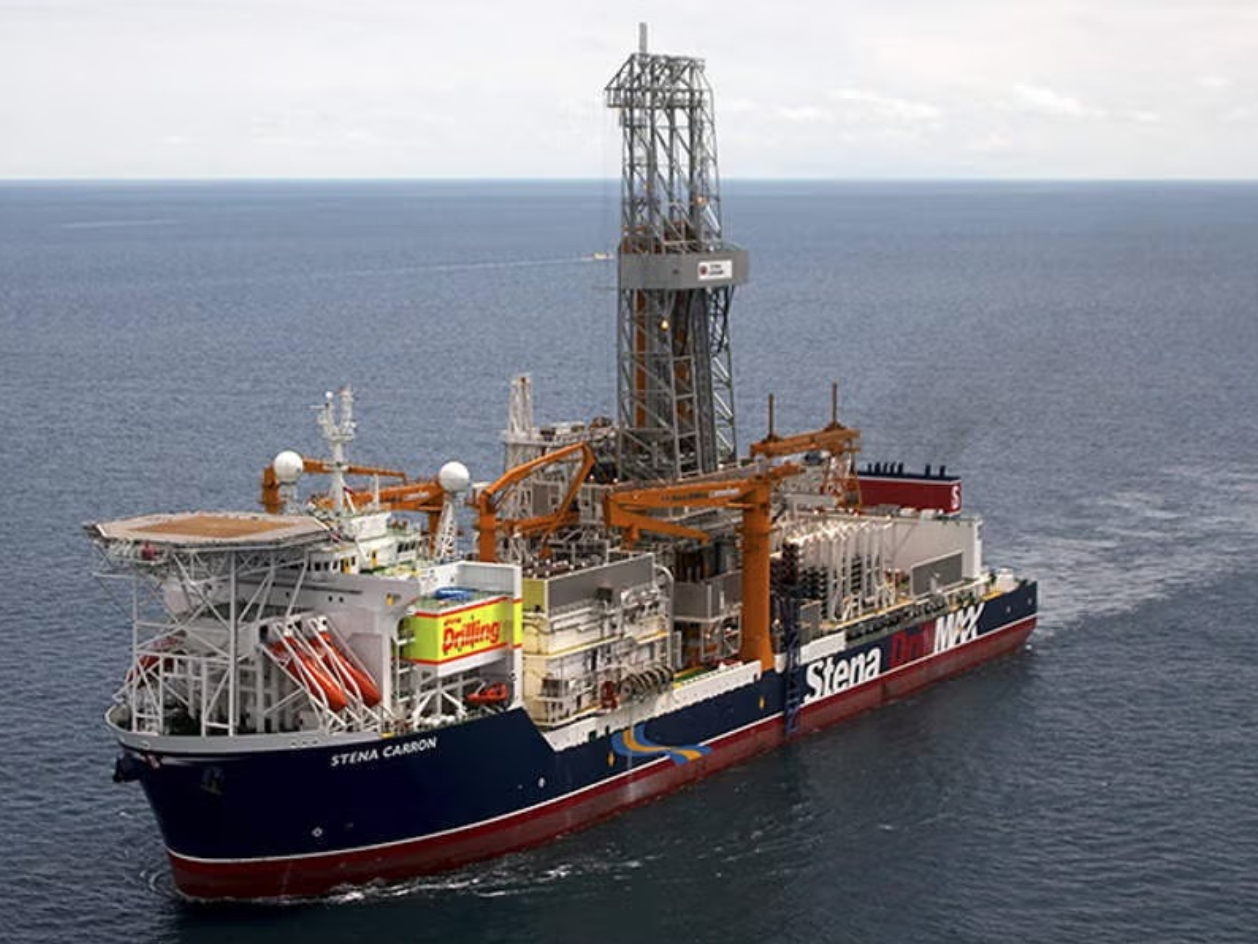
This newfound economic prosperity does not exist in a vacuum, however. The regional and global implications of Guyanese oil can be found, in part, in the companies drilling for it. The Stabroek Block is jointly managed by ExxonMobil, Chevron (which recently entered the picture due to its acquisition of the Hess Corporation),8 and CNOOC. While ExxonMobil and Chevron are both US public corporations, CNOOC, or the Chinese National Offshore Oil Company, is a state-owned enterprise of the People’s Republic of China. The three companies hold 45%, 30%, and 25% ownership stakes respectively, with ExxonMobil as the operator, the main company in charge of production management.9 Thus, the growth of the Guyanse oil economy relies on foreign companies, especially from the US. Furthermore, Guyana does not have any domestic oil refineries and cannot currently invest the capital necessary to build one, leading to further reliance on outside powers.10 In addition to its large role through ExxonMobil and Chevron, the United States is the largest importer of Guyanese crude oil, where the oil can be refined for other purposes.
The question that follows is this: with foreign firms driving economic growth and self-reliance a Herculean goal, how should Guyana navigate its foreign relationships, especially with the United States? In March 2025, Secretary of State Marco Rubio travelled to Guyana to meet with president Irfaan Ali. The two figures discussed Guyana’s economic development, mentioned threats posed by Venezuela, and generally reaffirmed the strength of good relations between the US and Guyana. Encouragingly, Rubio stated that the United States wants Guyana to prosper economically. “We think it’s of mutual benefit to see that happen,” he told Ali. Continuing to talk of Guyana’s rapidly growing economy, he said, “this country has an opportunity to transform…and what I mean by transformative change is not simply oil and gas fields.”11 It is thus abundantly clear that the US sees Guyanese prosperity as a foreign policy interest—Guyana must use this relationship to the fullest to secure a stable future for itself.
The most important area for Guyanese cooperation with the United States is security. Venezuela and Guyana have a long-term dispute over the “Guayana Esequiba” region which encompasses the western portion of Guyana. Recently, low intensity conflict over this region has begun to involve Guyana’s oil production in the Stabroek Block. On March 1st of 2025, a Venezuelan patrol boat entered Guyana’s EEZ (Exclusive Economic Zone) and approached an ExxonMobil offshore oil facility, triggering a Guyanese naval deployment.12 Maduro’s government in Venezuela has repeatedly threatened Guyana’s borders—Guyana must rely on its ties with the US to secure itself and reassure oil companies that their investments are safe. During his March trip, Rubio told a Guyanese reporter that “it will be a very bad day for the Venezuelan regime if they were to attack Guyana or attack ExxonMobil,” stating that the US Navy would intervene to protect American oil facilities in Guyana.13
In order to make the most of his country’s mineral wealth, President Ali should reciprocate Rubio’s pro-alliance sentiments. The Guyanese Navy can and should conduct exercises with the US Navy.14 Furthermore, Guyana should work with the United States diplomatically, acting as a strong partner in the region. The US needs regional allies to counter Maduro as Trump increases tensions with Venezuela, and Guyana can use its oil ties to American companies to stay in the good graces of US foreign policy. In exchange, Guyana should pursue security guarantees against Venezuela, guarantees to which Rubio has indicated openness.15
Economically, Guyana’s explosion of oil wealth gives it new importance on the world stage which it can further leverage in its economic relationships globally. Two major features set Guyana apart from other oil-rich countries. It is not part of the Organization of the Petroleum Exporting Countries—commonly known as OPEC—the oil cartel which sets prices and takes oil pricing out of the control of the US, and it has a small population, giving Guyana one of the world’s highest oil production levels per capita.16
First, the fact that Guyana is not part of OPEC places it in a better position to manage its relationship with the United States and US oil companies. Guyana has an opportunity to present itself as an alternative to less favorable oil exporting countries in OPEC, an organization which has acted combatively towards the US. Saudi Arabia, for example, has had a rocky relationship with the US since the killing of Jamal Khashoggi, and Guyana’s neighbor Venezuela, which continues to export oil to the US in limited quantities despite diplomatic tensions. According to the International Energy Authority (IEA) Guyana is already one of the countries most threatening to OPEC’s market share.17 If the US can extract sufficient oil from Guyana, it will be able to rely less on OPEC; a shift in purchasing from OPEC countries to Guyana would result in a long-term trade relationship between Guyana and the US. A steady relationship with the US could provide Guyana with the money it needs to reinvest in its populace and rapidly diversify its economy.
Second, Guyana’s small population and high profits from oil give the country an easy path towards diversification and stable development. The State Department’s 2025 Guyana Investment Climate Statement noted that Guyana “aims to diversify its economy through investments” in several other sectors and “views foreign direct investment (FDI) as critical for growing and diversifying the Guyanese economy.”18 However, foreign businesses currently view access to land, unclear bureaucracy, crime, and electricity costs as barriers to investment.19 To work towards a favorable view of investment, Guyana can take several steps to make it easier for foreign businesses to operate. President Ali should invest oil profits into the government in order to root out corruption, modernize and digitize investment bureaucracy, and build infrastructure across Guyana’s largely rural and underdeveloped countryside. In addition, Guyana can continue to work with the IMF to plan non-oil industries and discuss monetary policy.20 Specifically, a 2025 IMF consultation concluded that the country might shift from a strict currency exchange regime to a more flexible regime as profits stabilize.21 So far, Guyana’s strict currency exchange rate regime has helped the economy avoid currency appreciation, but this control would not be necessary in diversified economy.
Guyana stands at a crossroads of opportunity. The country has never before seen such an influx of wealth and opportunity, nor of global attention. President Irfaan Ali has the opportunity to court the US as a regional ally, secure his eastern border with Venezuela, and invest oil rents into long term national development. Should he do so, Guyana may prove to be an exceedingly rare example of a truly successful petrostate.
Notes
- "The World Bank in Guyana," World Bank Group, Last modified 2025, https://www.worldbank.org/en/country/guyana/overview#1.
- World Bank Group, "GDP (constant 2015 US$) - Guyana" Chart, World Bank Open Data, 2024, https://data.worldbank.org/indicator/NY.GDP.MKTP.KD?end=2024&locations=GY&start=1960.
- Binish Azhar and Marcelle Fowler-Thomas, "Guyana's Reelected President Ali Promises to Fast-track Oil Exploration," S&P Global, September 8, 2025, https://www.spglobal.com/commodity-insights/en/news-research/latest-news/crude-oil/090825-guyanas-reelected-president-ali-promises-to-fast-track-oil-exploration.
- Diana Roy and Amelia Cheatham, "Venezuela: The Rise and Fall of a Petrostate," Council on Foreign Relations, Last modified July 31, 2024, https://www.cfr.org/backgrounder/venezuela-crisis.
- World Bank Group, “Oil rents (% of GDP) - Guyana" Chart, World Bank Open Data, 2021, https://data.worldbank.org/indicator/NY.GDP.PETR.RT.ZS?end=2024&locations=GY&start=1960.
- "Consumption Indicators," Statista, Last modified September 2025, https://www.statista.com/outlook/co/consumption-indicators/guyana?srsltid=AfmBOoo7MBUMLg5ppDo8pNcvq0Q1lZ6cFANpIBoCOj9tYlLaUaePH2hc#household-income.
- Department of Public Information, Guyana, "IMF Endorses Guyana's Economic Strategy, Dismisses Dutch Disease Fears, Debt Management Concerns,"Department of Public Information, May 8, 2025, https://dpi.gov.gy/imf-endorses-guyanas-economic-strategy-dismisses-dutch-disease-fears-debt-management-concerns/.
- Chevron Corporation, "Chevron Completes Acquisition of Hess Corporation," Chevron Newsroom July 18, 2025, https://www.chevron.com/newsroom/2025/q3/chevron-completes-acquisition-of-hess-corporation.
- China National Offshore Oil, "Guyana," CNOOC International, https://cnoocinternational.com/operations/guyana/; "Liza Oil Field, Stabroek Block." NS Energy, Last modified February 12, 2020, https://www.nsenergybusiness.com/projects/liza-oilfield-stabroek-block-guyana/.
- "Setting up Oil Refinery in Guyana Even Less Viable Now from When Study First Done," OilNOW, Last modified June 25, 2020, https://oilnow.gy/featured/setting-up-oil-refinery-in-guyana-even-less-viable-now-from-when-study-first-done/.
- U.S. Department of State, "Secretary of State Marco Rubio and Guyanese President Irfaan Ali at a Joint Press Availability," U.S. Department of State March 27, 2025, https://www.state.gov/secretary-of-state-marco-rubio-and-guyanese-president-irfaan-ali-at-a-joint-press-availability.
- Phil Gunson "Venezuela Presses Territorial Claims as Dispute with Guyana Heats Up," International Crisis Group, Last modified April 8, 2025, https://www.crisisgroup.org/latin-america-caribbean/andes/venezuela-guyana/venezuela-presses-territorial-claims-dispute-guyana-heats.
- ibid.
- Ryan C. Berg,, Christopher Hernandez-Roy, Rubi Bledsoe, Henry Ziemer, and Eitan Casaverde, "What Is the Significance of Venezuela's Naval Incursion into Guyana?" Center for Strategic & International Studies, Last modified March 5, 2025, https://www.csis.org/analysis/what-significance-venezuelas-naval-incursion-guyana.
- Department of State, "Secretary of State.” https://www.state.gov/secretary-of-state-marco-rubio-and-guyanese-president-irfaan-ali-at-a-joint-press-availability.
- ExxonMobil, "ExxonMobil Guyana Marks Five Years of Oil Production," ExxonMobil, December 18, 2024, https://corporate.exxonmobil.com/locations/guyana/news-releases/1218_exxonmobil-guyana-marks-five-years-of-oil-production.
- Charlie Mitchell, "IEA Sees OPEC Holding Back 8 Million b/d By 2030, Squeezing Market Share," S&P Global, Last modified October 16, 2024, https://www.spglobal.com/commodity-insights/en/news-research/latest-news/crude-oil/101624-iea-sees-opec-holding-back-8-million-bd-by-2030-squeezing-market-share.
- Laura Romero and Diana Arjune, Department of State, 2025 Guyana Investment Climate Statement, U.S. Department of State, September 2025, https://www.state.gov/wp-content/uploads/2025/08/638719_2025-Guyana-Investment-Climate-Statement.pdf.
- ibid
- International Monetary Fund, "IMF Executive Board Concludes 2025 Article IV Consultation with Guyana,"International Monetary Fund, May 7, 2025, https://www.imf.org/en/News/Articles/2025/05/07/pr-25132-guyana-imf-executive-board-concludes-2025-article-iv-consultation#_ftn1.
- ibid