How Rapid Urbanization in Africa is Allowing China to Further their Quasi-Neocolonial Economic Initiatives


Olivia Anikst, University of Chicago
Africa is the continent with the most rapidly growing population, which has, in turn, led to rapid urbanization. The continent, home to about 1.4 billion people today, is expected to have an urban population of over 1 billion by 2035, per the Guardian1 Africa's population has been moving towards cities in search of jobs, education, financial opportunity and more. With rapid urbanization comes a need for technological advancements, goods, and infrastructure – a hole that has evidently been filled by Africa’s largest trading partner, China.
Africa also has the youngest population, due to the rapid population growth, with the median age in Africa being about 19 years-old and 70% of Sub-Saharan Africa aged under 30.2 The United Nations stated that the large youth population “brings many opportunities for economic growth and innovation, if these opportunities can be recognised and utilised.”3 In tandem with the need to mitigate issues of education, poverty, and unemployment, the key to facilitating the growth of African youths in workforce may be to work towards self-sufficiency and shifting away from external support from nations such as China.
The rapid urbanization and population growth in many African nations have created a plethora of issues for citizens and governments to confront, including civil unrest. Civil unrest and militant activity have taken on an increasingly urban quality, with nations like Nigeria and Sudan as an example. In Sudan, the civil war has “engulfed population-dense cities like Khartoum, Omdurman, and El Fasher, turning urban centers into active battlefields” per the Africa Center for Strategic Studies.4
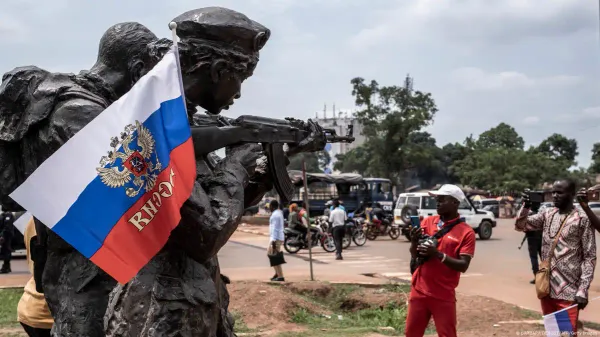
More intuitively, rapid urbanization has led to crises of housing, infrastructure, pollution, and a lack of energy accessibility. Population growth in cities leads to newfound economic opportunity, but also a question of where people can live, learn, and work. Thus, disparity and poverty in major African cities is evidenced by weak infrastructure, lack of jobs, and lack of housing. These gaps have been quickly filled by China, as is has become the single largest financier of African infrastructure on the global stage.5 While China’s famous Belt and Road Initiative (BRI) – a 2013 initiative led by Xi Jinping to make global infrastructural advancements facilitated by China – was originally directed at Asia and Europe, it has full-scale economic effects in many African nations. For some nations, the BRI has had substantial effects in creating infrastructure and promoting economic growth. In others, it has created concerns about debt sustainability and highlighted worker inequality, resembling imbalanced influence and neocolonialism.6 The BRI has long been under criticism for inflicting their own authoritarian regimes in developing countries – ones similar to the model that China uses in its own government, leading to issues with workers rights and human rights abuses.7 While the BRI has undoubtedly led to major advancements across the African continent in terms of infrastructure and technology, it also serves as a way for China to exert soft power on the continent.
With such a large hand in the infrastructural backbone of so many African cities – including major urban centers such as Kampala and Lagos – and a crucial trade relationship with African nations, China has established themselves as a much more amenable partner to African economies than Trump’s America. As the U.S. has pulled away from supporting African business and growing economies through trade and imports of goods, China has filled those gaps and supported African economies enormously as a major global partner. China’s stakes in Africa are both economically ever present and physically formative in growing African cities.
As for exports, the incentive to purchase cheap, technologically advanced Chinese products is as high as ever with the rapid urbanization of the continent. Tariff-free trading makes China Africa’s largest trading partner globally, having exported $81 billion worth of goods to China and importing a staggering $141 billion worth of goods in 2024. While China imports natural resources such as wood, oil, and minerals, it primarily exports steel, technological goods, solar panels, and materials to make infrastructural advancements such as trains and railways. The New York Times reported an example of China’s influence in the market through solar panels in Kampala, Uganda. A Ugandan shopkeeper noted the remarkable influence of Chinese solar panel brands amongst shops, based on their price and quality, and estimated about 99% of shopkeepers turned to using Chinese solar panels over European or Indian ones.8
The correlation between African consumption of Chinese goods and population growth is evident. South Africa, Nigeria, and Egypt were the “largest buyers of Chinese goods in 2023, and are each one of the top 6 most populous African nations.9 And with a $61 billion trade surplus over the African continent, China certainly has the upper hand in the trade relationship, benefiting off of African consumers far more than African nations benefit off of Chinese consumers. Nonetheless, Chinese companies seem to still profit off of African resources, continuing decades of history of Chinese stakes in the African continent. With such a large trade surplus despite the presence of Chinese corporations in Africa, questions about the extractive, and possibly even neocolonial relationship this poses are raised.
China has long been tapped into (and exploitative of) African resources. One of the most prominent examples (and, perhaps, the most relevant at the moment) are critical mineral sources, such as palladium mines, cobalt mines, and more. The Sino-Congolese Deal of 2007 gave Chinese mining companies access to cobalt mines in the Democratic Republic of Congo (DRC) in exchange for technological and infrastructural advancements. Over 18 years since the deal, there have been many discrepancies in the quality of the infrastructure, the timeliness of project completion, and unexpected costs, per “Quartz.”10 Regardless of human rights abuses, child labor convictions, and unsafe working conditions in mines run by Chinese mining companies, China has a dominance over about 80% of the cobalt market and much of the battery market as well.11 Most of the cobalt mined in DRC doesn’t stay there, as it is exported to China and sold back to consumers, including Congolese and other African consumers themselves, in our laptops, phones, and batteries.12 Not only is this outrightly paradoxical, but it is reminiscent of the colonial pasts of many African nations.
The same applies for the potential of African nations to tap into their energy supply. For example, the solar potential in North Africa and the Sahara region is notable, especially if it means it could power a continent with millions of inhabitants that live without electricity.13 With rapid urbanization comes the need for cities powered with consistent energy supply, which is now being provided by Chinese solar panels. If African energy supplies tapped into their own solar potential and complete projects such as the Desert-to-Power initiative – a project led by the African Development Bank to bring 250 million people energy via solar panels in the Sahara Desert – then the continent would be able to wane off of dependency on China.14
Similarly, as rapid urbanization has already left small, rural, grassroots businesses in distress, it also seems to highlight the reliance of Africa on global partners such as China for basic needs and employment. Though African nations such as the DRC have an immense amount of untapped mineral reserves, and thus, could mitigate issues of unemployment through potential African organization of labor, the neocolonial grasp that China has on Africa may be impeding their ability to grow their own economies.
We are left with a question regarding whether the pros outweigh the cons of China’s relationship with Africa, in the wake of rapid urbanization and a lack of other viable trading partners, but also child labor and exploitation of African resources. Should African nations be encouraged to diverge from neocolonial ties and explore self-sustainable methods for extracting their own natural resources? Or should they allow Chinese influence to run its course in favor of swift infrastructural, technological and economic advancements? Neocolonialism may be an important consideration in trying to answer these questions: resource-rich African nations are letting the opportunity to tap into their own supplies slip out of their fingers and into the hands of Chinese corporations. Chinese officials are quick to highlight their “mutually-beneficial relationship” with Africa, often in reference to the inability for some African nations to fill the gaps left in the wake of urbanization and population growth.15 Nonetheless, facilitating African economic growth and prosperity can only be achieved without imposing neocolonial efforts or influence — something China may be verging on.
Notes
- Savage, Rachel. “Rapidly Urbanising Africa to Have Six Cities with Populations above 10m by 2035.” The Guardian, August 22, 2024. https://www.theguardian.com/world/article/2024/aug/22/rapidly-urbanising-africa-to-have-six-cities-with-populations-above-10m-by-2035.
- Walsh, Declan. 2023. “The World Is Becoming More African.” The New York Times, October 28, 2023, sec. World. https://www.nytimes.com/interactive/2023/10/28/world/africa/africa-youth-population.html.
- Mulikita, Jason. “Young People’s Potential, the Key to Africa’s Sustainable Development | Office of the High Representative for the Least Developed Countries, Landlocked Developing Countries and Small Island Developing States.” United Nations. Accessed November 1, 2025. https://www.un.org/ohrlls/news/young-people%E2%80%99s-potential-key-africa%E2%80%99s-sustainable-development#:~:text=Africa%20has%20the%20youngest%20population,and%20priorities%20from%20young%20people.
- The Africa Center for Strategic Studies. “Africa’s Unprecedented Urbanization Is Shifting the Security Landscape – Africa Center.” The Africa Center for Strategic Studies. Accessed November 2, 2025. https://africacenter.org/spotlight/africa-urban-growth-security/.
- Marais, Hannah. “China’s Role in African Infrastructure and Capital Projects.” Deloitte Insights, June 20, 2025. https://www.deloitte.com/us/en/insights/industry/government-public-sector-services/china-investment-africa-infrastructure-development.html?utm_source=chatgpt.com.
- Dollar, David. “Understanding China’s Belt and Road Infrastructure Projects in Africa.” Brookings, September 7, 2023. https://www.brookings.edu/articles/understanding-chinas-belt-and-road-infrastructure-projects-in-africa/.
- ibid.
- Wakabayashi, Daisuke. “China’s Exports to Africa Are Soaring as Trade to U.S. Plunges - the New York Times.” The New York Times. Accessed November 2, 2025. https://www.nytimes.com/2025/09/08/business/china-exports-africa.html.
- China Africa Research Initiative. “Data: China-Africa Trade.” China Africa Research Initiative, September 2024. https://www.sais-cari.org/data-china-africa-trade.
- Maiza Larrarte, Andoni. “How to Avoid Flawed Minerals-for-Infrastructure Deals like DR Congo and China’s Sicomines Pact.” Quartz, 20AD. https://qz.com/africa/1586753/china-and-dr-congo-sicomines-cobalt-mine-deal-is-flawed.
- Gross, Terry. “How ‘modern-Day Slavery’ in the Congo Powers the Rechargeable Battery Economy.” NPR, February 1, 2023. https://www.npr.org/sections/goatsandsoda/2023/02/01/1152893248/red-cobalt-congo-drc-mining-siddharth-kara.
- ibid.
- Cairns, Rebecca. “Africa Has ‘unlimited’ Solar Potential. Off-Grid Power Could Help Light up the Continent.” CNN, October 16, 2025. https://www.cnn.com/world/africa/africa-solar-power-potential-off-grid-hnk-spc.
- The African Development Bank. “The African Development Bank’s Desert to Power Initiative | African Development Bank Group.” African Development Bank Group, May 23, 2024. https://www.afdb.org/en/news-and-events/african-development-banks-desert-power-initiative-71072.
- Suri, Rishi. 2024. “China’s Neocolonialism in Africa.” Globalorder. March 28, 2024. https://www.globalorder.live/post/china-s-neocolonialism-in-africa.