Moscow’s New Puppet in Africa: The Transition from the Wagner Group to Africa Corps

Eda Unan, University of Chicago
The Wagner Group, officially known as Private Military Company (PMC) Wagner, was a Russian-led mercenary group fighting in proxy wars. These proxy wars included, but were not limited to, those in Ukraine, Syria, Libya, Mali, and the Central African Republic. While serving in favor of the foreign interests of the Russian Federation and to gain mining rights alongside money in these regions, the mercenaries have been documented to commit horrendous human rights abuses against the civilians. However, the group started to fall out with the Russian military due to conflicts between leaders. After the death of their founder, Yevgeny Prigozhin, in 2023, this led to Moscow transforming the decentralized Wagner into a new, more openly state-run force called the “Africa Corps”. The overall mission of the Africa Corps is intended to be similar to that of the Wagner group: to train local armies, guard (and plunder) mines and government officials, and extend Russia’s sphere of influence. This shift highlights Russia’s evolving strategy in its efforts to become a hegemon, where the future of it leads to changing the fate of Africa’s political landscape as a whole, to one that is dependent on Moscow.
To understand the actions of Wagner and parallel them to the future of the Africa Corps, examining how the group came into being is crucial. It is challenging to define the group, their actions, and put them into a classification, as according to Professor Kimberly Marten, Wagner “doesn’t fit well [into] any existing [PMC] category or template in the literature.” The Wagner group first emerged during the war in Donbas in 2014, a phase of the Russo-Ukrainian War, where they aided Russian separatist forces against the Ukrainian army, later playing an integral role in the full-scale Russian invasion of Ukraine. They at first recruited Russian prisoner inmates for frontline combat, but then grew to around 20,000-50,000 soldiers. Co-founded by Dmitry Utkin, a Russian military officer and mercenary, and Yevgeny Prigozhin, an oligarch and close advisor to Vladimir Putin, Wagner was exploited by Russia to project power abroad without direct military accountability.
This appearance of the group in 2014 was not sudden, unexpected, or without reason. Russia had observed Western states outsource security to private firms in Iraq and Afghanistan. Looking closer into the nation, it faced the need for flexible manpower during its seizure of Crimea and outbreak of war in the Donbas. The fiasco of the “Slavonic Corps”, an ad-hoc Russian private formation aiding the Syrian government forces in the civil war during 2013, offered a very negative template as it collapsed under poor planning. If Moscow were to use PMCs, it needed them to coordinate with military intelligence and the Ministry of Defence (MoD). This was why the government wanted trusted leaders to form Wagner; with Utkin, a former military special forces officer, and Prigozhin, titled the “chef of Putin”, acting as the network’s financier, recruiter, and public face, Wagner was closely associated with Russian interests from its inception.
Wagner’s existence occupied a gray zone as Russian law prohibited private military companies; hence, it existed through a patchwork of shell companies and state contracts with the help of Prigozhin’s conglomerates. Wagner functioned as a semi‑state instrument, where the MoD provided training facilities, heavy equipment, airlift, and battlefield integration, and diplomatic channels eased access agreements with foreign governments. They operationally came to what they were in two conflicts, in Syria and Ukraine. In the Donbas, the mercenaries supported separatists and provided specialized combat forces, while obscuring Moscow from direct responsibility. In Syria, a more revenue-based strategy was employed. Security for oil and gas fields, protection of infrastructure, and expeditionary assaults were promised to the government forces, with a contract to share resource outputs. However, the group’s ambush by the U.S. forces in 2018 showcased a weakness, that proxy conflicts were wearying when the environment was not well-known.
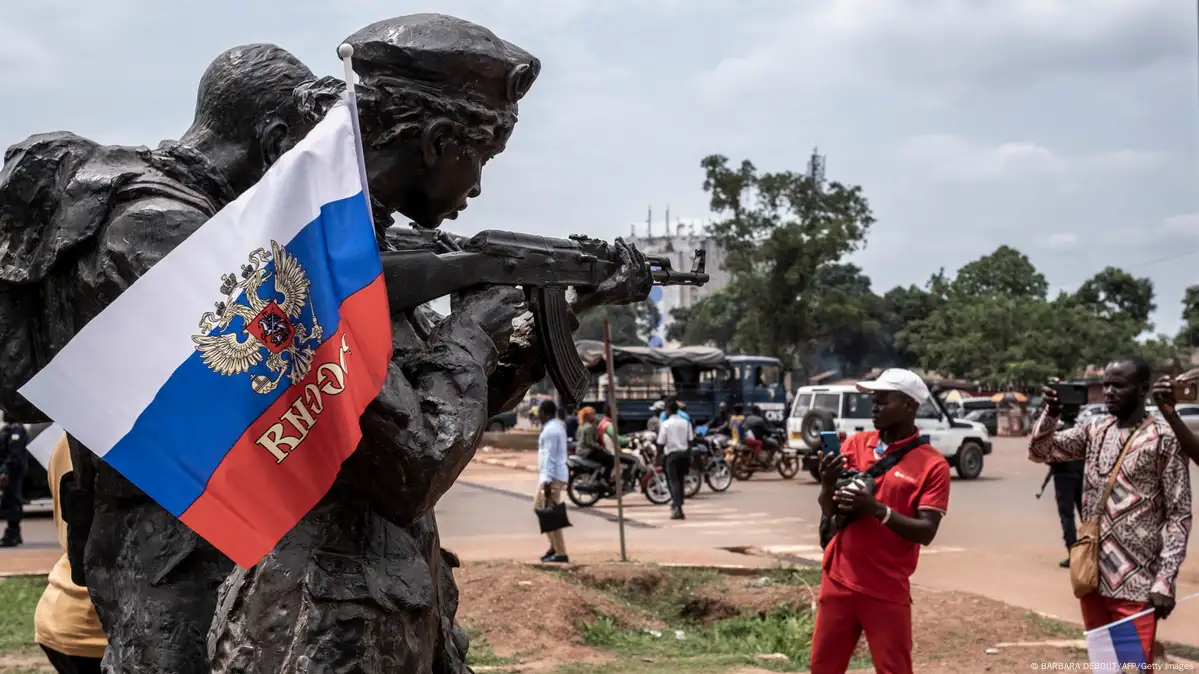
The next step for Wagner was to be utilized to aggressively export this model to Africa, especially to the Sahel region and Central Africa. They were sent by Moscow to train elite forces, provide “security” for regimes facing insurgencies, and conduct counter-offensive operations. In Mali, the group arrived as the Malian junta sought an alternative to past Western partners, stepping into the void following the French and United Nations withdrawals. Wagner offered expert military men for access to natural resources and political alignment, specifically for the sake of new allies in the UN, aiming to influence voting procedures to Moscow’s benefit. However, their operations in Africa have also been repeatedly flagged for severe human rights violations. The Human Rights Watch (HRW) documents that from January 2025 onward, the Malian army and Wagner have committed dozens of summary executions and enforced disappearances of an ethnic group, the Fulanis. There were at least 12 executions, 81 disappearances, the burning of 30 homes, beat-up guys, and dozens of bodies discovered. According to the Armed Conflict Location & Event Data Project (Acled), an NGO, at least 1,800 civilians have been killed during Wagner’s operations across Africa since 2017. Equally troubling, in the Central African Republic (CAR), Wagner-linked forces have been alleged to conduct mass killings, mine lootings, and civilian intimidations. The “dirty war” logic terrorised local populations and bound local elites economically and politically to Moscow, proving to have an overall negative effect on the civilians.
The reason why Russia sent Wagner to Africa at first lies in a mix of different rationales. The Sahel region and Central Africa offered a strategic power vacuum, as Western powers were reducing their influence, creating openings for African nations to find new security partners. With its provision of “no strings attached” security services, Russia could pursue African regimes, therefore earning diplomatic allies. As aforementioned, these allies matter with their ability to influence the voting procedure in UN bodies, where they could support Russia in its position against Ukraine, portraying Moscow as a long-awaited global power rather than a regional one. However, at its basis, the model was economically and resource-driven, as the African nations gave access to natural resources (gold, diamonds, or timber), funding the operations and deepening the state-client dependency. The results of this were mixed. Although they achieved some rapid tactical wins alongside the government forces in most African nations, especially the CAR, Mali, and Sudan, these wins did not translate to lasting stability. These nations continue to be dependent on the help of mercenaries to impede conflicts; through this, Russia gains diplomatic strength and achieves its aim of disrupting Western influence in the region.
Things declined in August 2023. A private jet carrying Prigozhin and nine others, including Wagner’s senior commanders Utkin and Valey Chekalov, crashed in Russia’s Tver Oblast, killing everyone on board. This incident occurred two months after Prigozhin’s brief rebellion against the Russian military leadership, as Wagner seized the Russian city of Rostov-on-Don and advanced towards Moscow. The Kremlin got humiliated with this act, and it proved to the world that a private army could challenge the state authority. Western intelligence concludes that an explosion in the aircraft most likely caused the crash, leading to the interpretation that it was a targeted elimination rather than an accident. This marked the end of the Wagner group’s semiş-independent and obscure status. Without Prigozhin, the mercenaries lost their leader and charismatic center of gravity
In the following months, the group broke into pieces; thousands of men signed contracts with the MoD, and others dispersed to Belarus or stayed stationed across Africa. Kremlin needed to preserve Wagner’s beneficial overseas network, especially those in Africa, but it needed tighter control over the fragmented army. The solution to this was rebranding, calling Wagner “Africa Corps”, a new formation placed directly under the control of the MoD and government intelligence services, announced in 2024. In mid-2024, it was made public that Africa Corps would replace Wagner forces in Burkina Faso. By mid-2025, Africa Corps absorbed most of Wagner’s personnel, equipment, and contracts, particularly in Mali and the Central African Republic, where it was decided that Wagner would withdraw from Mali, and Africa Corps would take over the operations to maintain stability and security. While the Wagner group operated as a semi-private force financed through resource deals where the government did not have to take accountability for its actions with the deniable state backing, Africa Corps is formally a part of the MoD, meaning that it is a state-run version of the same project. Wagner’s mission of securing regimes and extracting economic resources is retained, but its independence is stripped.
By replacing mercenary control with ministry-controlled corps, Moscow’s effort to institutionalize its control over Africa becomes evident. They remanifested the same idea under a different name and can now frame intentions as a way to maintain a peaceful and stable environment in African nations, rather than clandestine and controversial mercenary work. Through this approach, although the operations are still unfolding, it is predicted that it will be easier for Russia to sign bilateral agreements, expand its influence, and advance in the diplomatic sphere. For the African states involved, little has changed. The same objectives, soldiers, and tactics remain; however, the shift to direct Russian oversight now means that Moscow bears explicit responsibility for the successes and abuses committed by the corps. Now, the Africa Corps is said to exist in aiding counterterrorism in Mali, Burkina Faso, Niger, Libya, the Central African Republic within Africa, and in the Russo-Ukrainian War. Although in November 2024, Africa Corps was sanctioned by the United Kingdom as it was connected to the private mercenary groups Bears Brigade and PMC Espanola to inhibit illicit Russian activities and destabilization of African countries, the corps is still functioning by getting its resources from alternatives or the resource-rich Sahel region.
The transformation of Wagner to the Africa Corps is a defining moment in Russia’s strategy to extend its sphere of influence to other continents, establishing its power once again as a hegemon. Africa Corps symbolizes the state’s determination to turn Wagner into a permanent tool of influence, in which the Kremlin’s goal remains constant: to secure natural resources, showcase power, and gain diplomatic leverage through its alliances gained in conflict. For African nations, despite a short period of stability, the transformation deepens dependency on foreign interference. The implications of placing the corps under military oversight are uncertain, but the same mission as that of the Wagner group remains: to advance Russia’s ambition to shape the global order, working on one proxy battlefield at a time.
Notes
- Carnegie Endowment for International Peace. “Why Yevgeny Prigozhin Had to Die,” 2023. https://carnegieendowment.org/russia-eurasia/politika/2023/08/why-yevgeny-prigozhin-had-to-die?lang=en.
- Egbejule, Eromo. “More Control, Less Deniability: What next for Russia in Africa after Wagner?” The Guardian, May 21, 2024, sec. World news. https://www.theguardian.com/world/article/2024/may/21/what-next-for-russia-in-africa-after-wagner-moscow-influence.
- Ewokor, Chris, and Kathryn Armstrong. “Russian Troops Arrive in Niger as Military Agreement Begins.” Www.bbc.com, April 12, 2024. https://www.bbc.com/news/world-africa-68796359.
- Faulkner, Christopher. “Undermining Democracy and Exploiting Clients: The Wagner Group’s Nefarious Activities in Africa.” CTCSENTINEL. Combating Terrorism Center at West Point, June 2022. https://ctc.westpoint.edu/wp-content/uploads/2022/06/CTC-SENTINEL-062022.pdf.
- Global Engagement Center. “The Wagner Group’s Atrocities in Africa: Lies and Truth - United States Department of State.” United States Department of State, February 13, 2024. https://2021-2025.state.gov/the-wagner-groups-atrocities-in-africa-lies-and-truth/.
- Global Initiative. “Russia’s Africa Corps and the Business of Conflict,” February 14, 2025. https://globalinitiative.net/analysis/russia-africa-corps-business-of-conflict/.
- Human Rights Watch. “Mali: Army, Wagner Group Disappear, Execute Fulani Civilians,” July 22, 2025. https://www.hrw.org/news/2025/07/22/mali-army-wagner-group-disappear-execute-fulani-civilians.
- Hummel, Kristina. “Africa Corps: Has Russia Hit a Ceiling in Africa?” Combating Terrorism Center at West Point, December 20, 2024. https://ctc.westpoint.edu/africa-corps-has-russia-hit-a-ceiling-in-africa/.
- Karr, Liam. “Africa File Special Edition: Syria’s Potential Impact on Russia’s Africa and Mediterranean Ambitions.” Critical Threats, 2024. https://www.criticalthreats.org/analysis/africa-file-special-edition-syrias-potential-impact-on-russias-africa-and-mediterranean-ambitions.
- Marten, Kimberly. “Russia’s Use of Semi-State Security Forces: The Case of the Wagner Group.” Post-Soviet Affairs 35, no. 3 (March 26, 2019): 181–204.
- Miller, James. “The Insane Story of Russian Mercenaries Fighting for the Syrian Regime.” Huffington Post, November 21, 2013. https://web.archive.org/web/20231011190515/https://www.huffpost.com/entry/the-insane-story-of-russi_b_4317729.
- Niko Vorobyov. “Wagner vs Africa Corps: The Future of Russian Paramilitaries in Mali.” Al Jazeera, June 16, 2025. https://www.aljazeera.com/news/2025/6/16/wagner-vs-africa-corps-the-future-of-russian-paramilitaries-in-mali.
- Nimi Princewill. “In Africa, Russia Is Swapping a Ruthless Paramilitary for a Replica It Can Control. What’s Putin’s Game Plan?” CNN, August 25, 2025. https://www.cnn.com/2025/08/25/africa/russia-africa-corps-wagner-intl-cmd.
- Office, Development. “UK Strikes at Heart of Putin’s War Machine.” GOV.UK, November 7, 2024. https://www.gov.uk/government/news/uk-strikes-at-heart-of-putins-war-machine.
- OHCHR. “CAR: Russian Wagner Group Harassing and Intimidating Civilians – UN Experts,” October 21, 2021. https://www.ohchr.org/en/press-releases/2021/11/car-russian-wagner-group-harassing-and-intimidating-civilians-un-experts.
- OHCHR. “Russian Federation: UN Experts Alarmed by Recruitment of Prisoners by ‘Wagner Group,’” March 10, 2023. https://www.ohchr.org/en/press-releases/2023/03/russian-federation-un-experts-alarmed-recruitment-prisoners-wagner-group.
- Reuters Staff. “Russian Troops Deploy to Burkina Faso.” Reuters, January 25, 2024. https://www.reuters.com/world/africa/russian-troops-deploy-burkina-faso-2024-01-25/.
- Smith, Peter. “Española: Russia’s Far-Right Hooligan Militia and Its Online Activities - GNET.” GNET, August 9, 2024. https://gnet-research.org/2024/08/09/espanola-russias-far-right-hooligan-militia-and-its-online-activities/.
- T2COM G2 Operational Environment Enterprise. “Russia’s ‘Africa Corps’ Set to Replace Wagner in Niger | T2COM G2 Operational Environment Enterprise.” T2COM G2 Operational Environment Enterprise, September 19, 2025. https://oe.tradoc.army.mil/product/russias-africa-corps-set-to-replace-wagner-in-niger/.
- The Economist. “Wagner Routinely Targets Civilians in Africa,” August 31, 2023. https://www.economist.com/graphic-detail/2023/08/31/wagner-routinely-targets-civilians-in-africa.